- Home Page
- Kiddy Kites
Kids' Kites
"Buyer Beware" With Kiddy Products!
Are you a parent, looking for kids kites suitable for your young child?
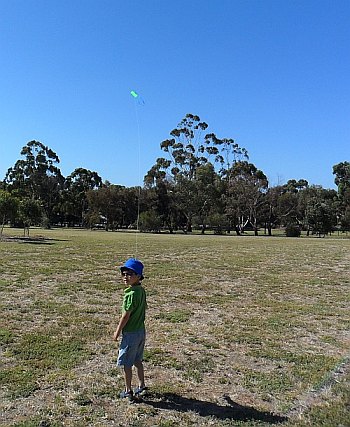
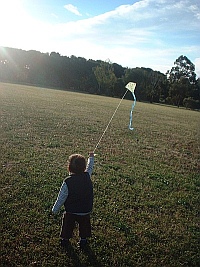 A very small kite-flyer
The flying of simple kites has proven itself to be a great family-bonding activity. As long as you let the kids fly the kite and don't hog it for yourself too often!
Kites for fairly small kids is the emphasis on this page.
We've been to a few festivals, and it's not hard to tell when there has been a recent workshop for making kites for, or by, children. Small kids and small kites are to be seen here, there, and everywhere! It's like a mini kite-festival off to one side of the main event, you could say.
Here on this page is a whole lot of info on all the different kinds of retail novelty kites and small more-traditional designs that are being bought these days.
There's also a whole world of multi-line kites out there, but these are generally more expensive and better suit 8-year-olds and up. Besides, I personally have a bias toward single-line designs of all kinds!
Kids Kites in the West
Here's a short list of the most popular types:
Novelty: This covers a wide variety of cute designs which don't easily fit into any of the more traditional categories. For example:
Airplane kites
Helicopter kites
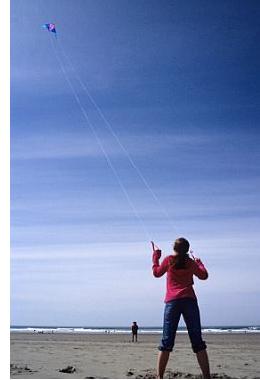
 The small kite flyer grown up a bit!
Diamonds: These are the classic kids' simple kites! With a little care, these can last quite a while and the good ones fly quite high. The flat sail means the decoration is clearly visible in the air.
Deltas: The Baby Bat kite is a particularly well-known small delta for kids. These bird-like triangular designs are efficient flyers, particularly in the larger sizes. They are known for achieving high line-angles in even fairly light breezes. Like the diamond, the sail decoration is plainly visible in the air, and they are popular starter kites for children.
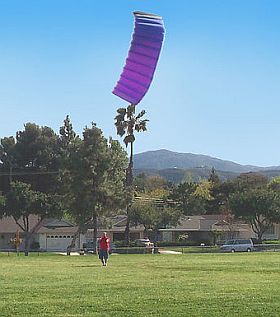
Parafoils: The nice thing about a kids parafoil is that it has no spars. The inflatable design allows it to be scrunched up into a small space for transport. We've seen a few of these around and they seem to be reliable flyers. They won't fly quite as high as other types though, for a given length of line.
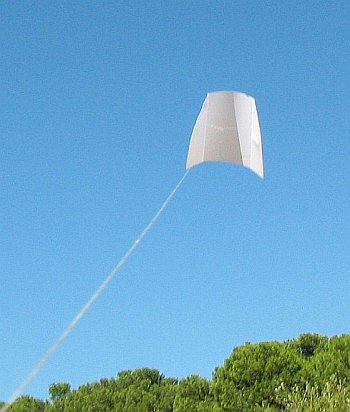
Sleds: These are very simple two-spar kites and roll up for easy transport. The very smallest ones aren't hugely efficient, like the Baby Sled our 5-year-old Aren is flying in the photo. However, the larger ones compare well to similar-sized parafoils. Most modern sled kites can take a fair amount of rough handling by young kids!
Small parafoils and sleds are certainly easy kites to play around with in a family setting.
Wind Speed Handy Reference
Light Air
1-5 kph
1-3 mph
1-3 knts
Beaufort 1
Light breeze
6–11 kph
4–7 mph
4–6 knts
Beaufort 2
Gentle ...
12–19 kph
8–12 mph
7–10 knts
Beaufort 3
Moderate ...
20–28 kph
13–18 mph
11–16 knts
Beaufort 4
Fresh ...
29–38 kph
19–24 mph
17–21 knts
Beaufort 5
Strong ...
39–49 kph
25–31 mph
22–27 knts
Beaufort 6
High Wind
50-61 kph
32-38 mph
28-33 knts
Beaufort 7
Gale
62-74 kph
39-46 mph
34-40 knts
Beaufort 8
Getting Into the Hobby
So how do you go about getting your young child into flying kids kites? There are three approaches:
- Make a kite from scratch.
When it comes to cheap kites for kids, this is the cheapest of all! Finding suitable materials is not a problem in most countries.
- Buy a kite. A huge range of inexpensive and colorful kids' kites are available, particularly online.
- Buy a kite kit. Besides being cheap, this option involves your child in assembling something—with some help from you if necessary.
When buying a kite online,
the information listed with it is usually quite informative. For example, the info might include the sail size, wind speeds you can fly it in, and what age range it suits. There might even be testimonials from other customers!
Kite kits are a great idea if your child enjoys making things. Pretty well everything is included, for just a few dollars. If some aspects of building of the kite itself are a bit much for the child, then they can at least have fun with the decoration of the sail.
Scratch-built kites for children use materials that are commonly available either from shops or already sitting in a cupboard somewhere at home. You can just go out to fly with a plain kite, as I prefer. Or, you can get a bit arty and get into some kite crafts to really dress up your kite!
As we raised our boy through his early years, we involved him in kite flying on a regular basis. Hence, we weren't able to resist putting together a small collection of "child flying kite" pictures!
Also on the topic of child flyers... A cartoon kite is usually depicted being flown by a very young person!
Age is a factor in how a child enjoys kite flying.
What about the non-Western world? The above list would no doubt be true to a large extent no matter where in the world the child comes from. I can think of one big contrast though, and that is the fighter-kite cultures of the world.
With kite-fighting, the last one flying is the winner. In a number of countries, using kites in this way is very popular, particularly in the poorer neighborhoods. For these children, flying is just as much about competing with other flyers as it is about flying the kite itself. You just don't see that in the West, although an increasing number of adults are aware of this sport. Having fun in a group setting with fighter kites is definitely on the rise in the West.
You Might Like These
Paper Kites, And Other Single Liners
Paper kites have been around for many centuries. Read about some specific types here, as well as other single-line kites.
Asian Kites - From China to Bali, via India
Asian kites - almost all Asian nations have a distinct kite culture! See many of their kites here...
Power kites, traction kites, take me for a ride!
What can you use power kites for, these days? A hundred different things. Get dragged across sand or over water, or just stand there and make your kite do stunts.
Stunt Kites - Delta, Diamond, Parafoil or Quad?
All about stunt kites - all the different types, how they fly.